

The Backend-to-Brand Framework
A strategic 7-step framework designed to align operations, brand systems, and growth infrastructure for scalable, sustainable business growth.
The Backend-to-Brand™ Framework aligns operations, systems, and brand to eliminate bottlenecks and build scalable infrastructure for sustainable growth.
Why the Framework Exists
Most businesses attempt to solve scalability challenges with more marketing, more tools, or more hires.
But growth without aligned systems creates operational pressure instead of operational freedom.
As visibility and demand increase, businesses often experience:
• inconsistent workflows
• founder dependency
• disconnected systems
• delivery inefficiencies
• operational bottlenecks
• unclear positioning
• customer experience breakdowns
The Backend-to-Brand Framework was developed to address the root operational and strategic issues limiting sustainable growth.
By aligning backend operations with frontend brand strategy, businesses are able to:
• improve efficiency
• increase profitability
• strengthen customer experience
• reduce operational friction
• scale with greater clarity and control
The 7 Stages of Scalable Business Infrastructure
Each stage of the framework is designed to create operational alignment, strategic clarity, and scalable systems that support sustainable business growth.
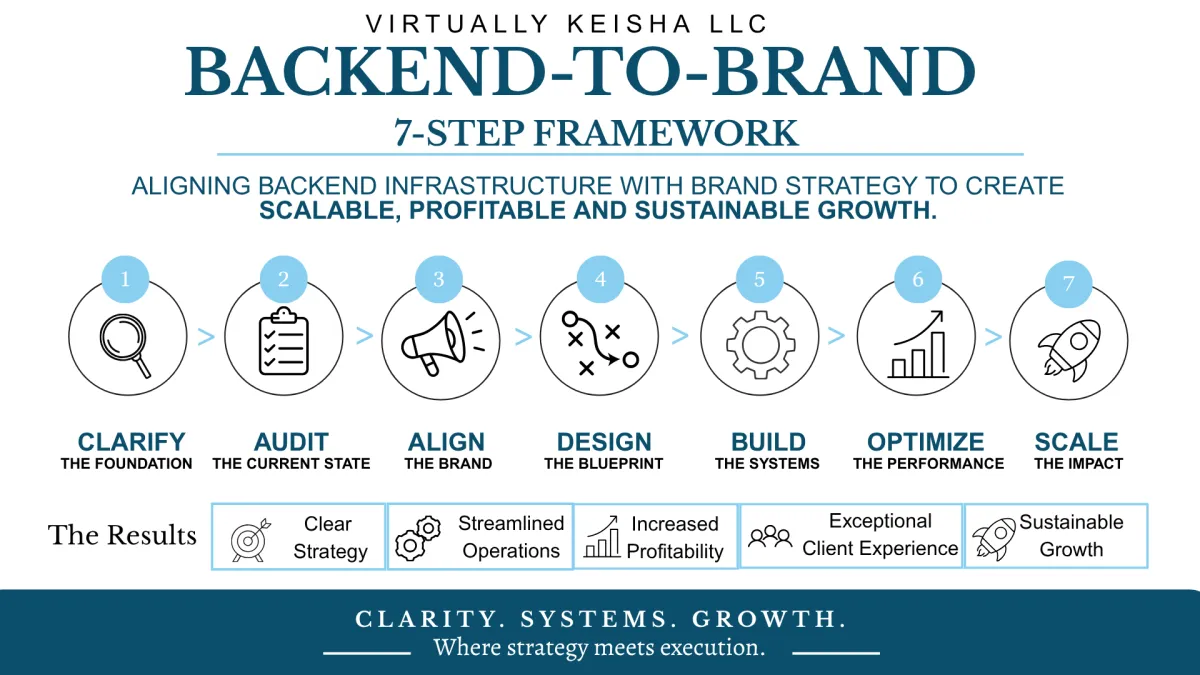
STEP 1: CLARIFY
Define the strategic direction behind scalable growth.
Before systems can be optimized, the business must have clarity around its goals, positioning, customer journey, and growth direction.
At this stage, we define:
• vision and business objectives
• positioning and differentiation
• customer experience priorities
• operational pain points
• growth goals and scalability barriers
Outcome
A clear strategic foundation aligned with long-term business growth.
STEP 2: AUDIT
Identify the operational and brand bottlenecks limiting growth.
Growth-stage businesses often experience inefficiencies that remain hidden beneath revenue growth and visibility.
This stage evaluates:
• workflows and operations
• systems and infrastructure
• customer experience
• delivery processes
• communication systems
• operational dependencies
• brand alignment
We identify what is slowing growth, increasing complexity, and reducing scalability.
Outcome
Clear visibility into operational gaps, inefficiencies, and missed opportunities.
STEP 3: ALIGN
Create cohesion between operations, messaging, and customer experience.
Scalable businesses operate consistently across every touchpoint.
At this stage, we align:
• brand messaging
• operational workflows
• customer journey experiences
• internal processes
• service delivery systems
• visibility and conversion strategy
This ensures the business communicates and operates with consistency, professionalism, and strategic clarity.
Outcome
An aligned business foundation designed to support scalable growth and stronger customer experiences.
STEP 4: DESIGN
Develop the infrastructure required for scalable execution.
Once operational gaps are identified and alignment is established, we design the systems and operational architecture required to support both current delivery and future growth.
This may include:
• workflow systems
• SOP structures
• operational processes
• team infrastructure
• client experience systems
• project management architecture
• automation planning
Outcome
A strategic operational blueprint designed for efficiency, consistency, and scalability.
STEP 5: BUILD
Implement the systems that support scalable operations.
Strategy without implementation does not create transformation.
At this stage, systems, workflows, and operational structures are implemented to create measurable improvements in execution and efficiency.
We build:
• streamlined workflows
• scalable operational systems
• process documentation
• automation systems
• customer experience infrastructure
• operational support systems
Outcome
A business operating with greater efficiency, consistency, and operational control.
STEP 6: OPTIMIZE
Refine performance, efficiency, and operational effectiveness.
As systems are implemented, optimization becomes essential to improving scalability and profitability.
This stage focuses on:
• workflow refinement
• operational efficiency
• performance improvement
• process optimization
• system enhancements
• reducing operational friction
Optimization ensures the business continues operating at a high level as growth increases.
Outcome
Improved operational performance, efficiency, and profitability.
STEP 7: SCALE
Position the business for sustainable long-term growth.
When operations, systems, and strategy are aligned, growth becomes more predictable, scalable, and sustainable.
Businesses are able to:
• reduce founder dependency
• improve scalability
• increase operational consistency
• strengthen profitability
• support increased demand
• scale with greater confidence and control
Outcome
A business designed to sustain long-term growth without operational chaos.
More Than Strategy.
Operational Transformation.
Most consulting approaches focus on isolated areas of growth:
• marketing
• branding
• operations
• automation
• hiring
The Backend-to-Brand™ Framework integrates these elements into one aligned system designed to support scalable execution and long-term business growth.
Because visibility alone does not create scalability.
Infrastructure does.
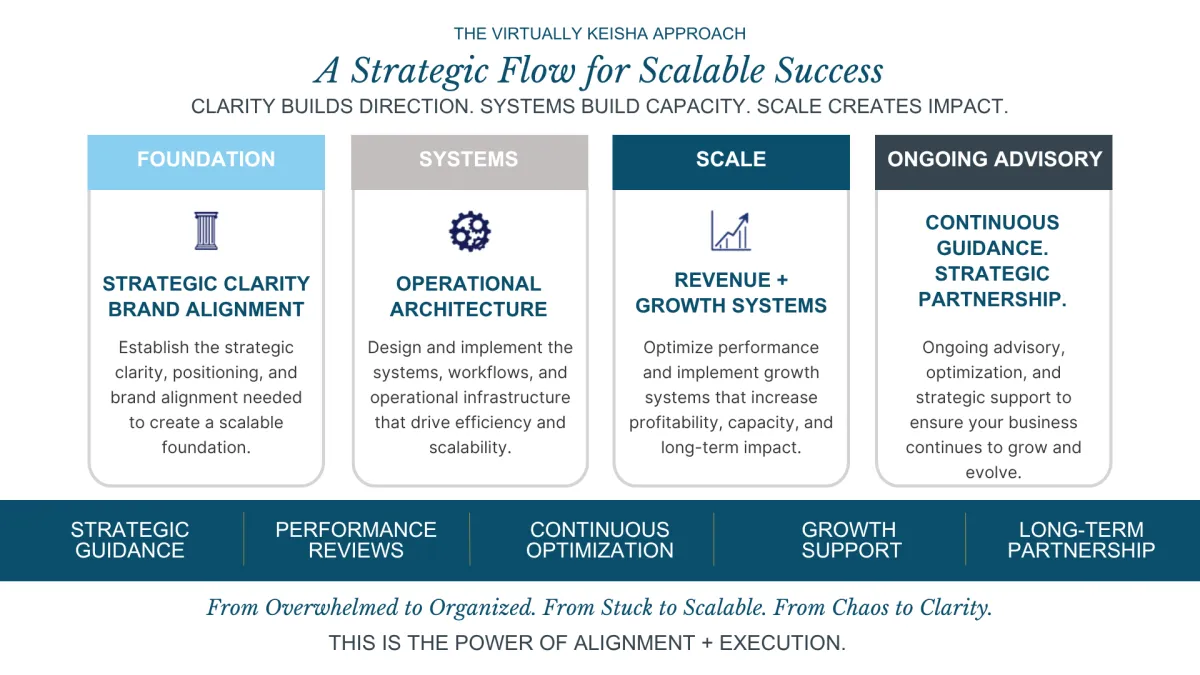
Build the Infrastructure Behind Scalable Growth
If your business is generating growth but struggling with operational complexity, inconsistent systems, or scalability pressure, the issue may not be effort.
It may be infrastructure.
Let’s identify what’s limiting growth and build the systems required to support your next level.
Clarity. Systems. Growth.
Where strategy meets execution.